
Skin Health
A considered, evidence-led approach to skin quality, pigmentation and texture, using chemical peels and medical-grade skincare to build healthier skin over time.
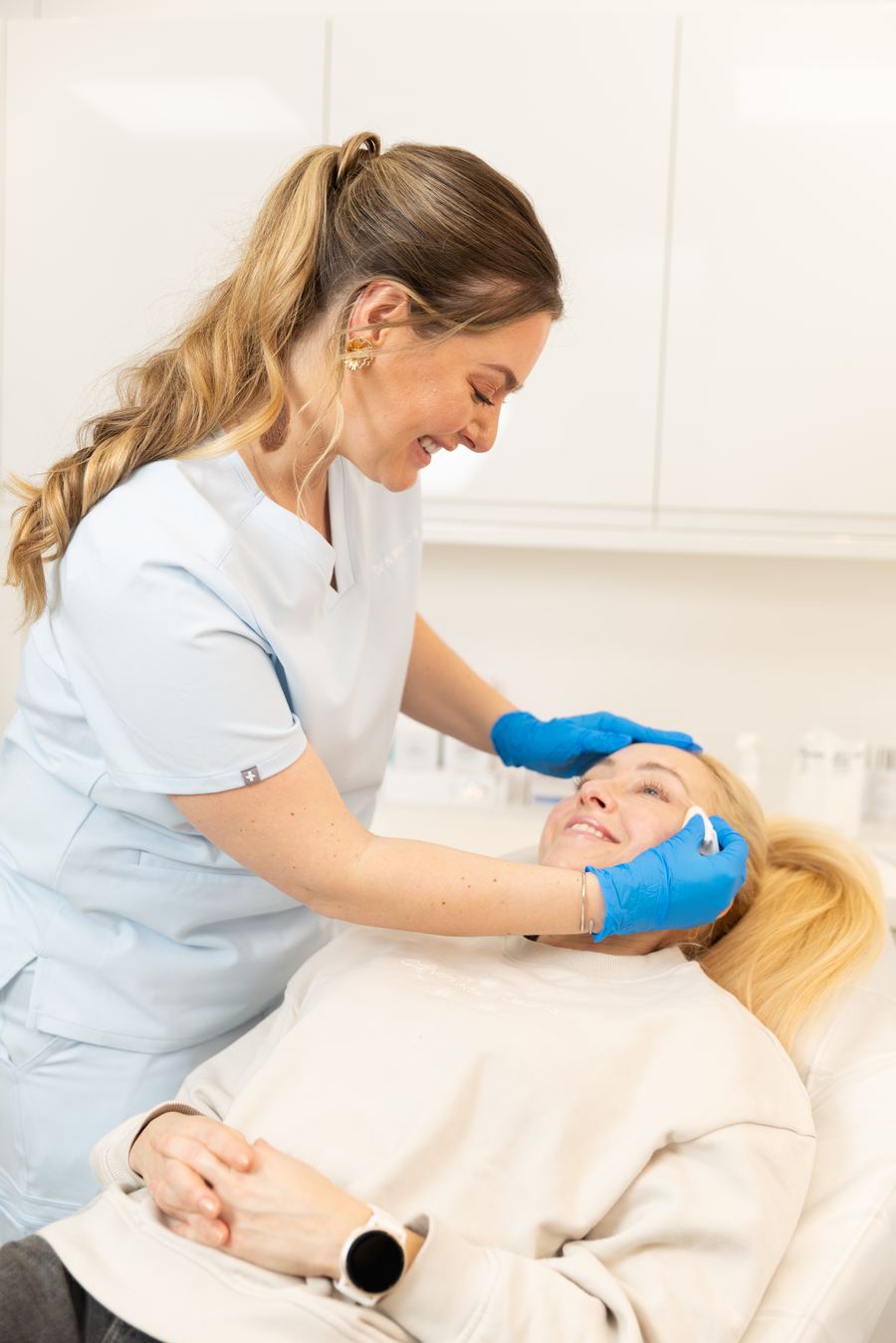
What is it?
Skin health is about the quality of the skin itself: its texture, tone, clarity, hydration and resilience. Many people don’t realise how much of what they see in the mirror is skin rather than structure.
My approach combines a clear diagnosis with treatments that build on each other. That usually means medical-grade skincare you use at home, from Alumier, ZO Skin Health or Obagi, with prescription skincare available after a consultation, sometimes supported by in-clinic Obagi or laser peels, and, where appropriate, laser or regenerative treatments.
Why I might recommend it
I may recommend focusing on skin when the main concern is dullness, uneven tone, pigmentation, enlarged pores, rough texture, breakouts or early sun damage. I often suggest it before or alongside other treatment, because healthy skin responds better.
Chemical peels use carefully chosen acids to remove the outer layers of dead skin cells in a controlled way, encouraging renewal. Medical-grade skincare usually contains active ingredients at higher strengths than many high street products, and I choose it for your skin after an assessment. The two work well together: the peel moves things on, and the daily routine maintains and protects the improvement.
Who it suits
- People who want healthier, brighter skin without changing how they look
- Patients with pigmentation, sun damage or uneven tone
- Anyone with rough texture, congestion or enlarged pores
- People who have spent a great deal on products without knowing what their skin needs
Peels are not suitable for everyone. Pregnancy and breastfeeding, active infection, certain skin conditions, recent sun exposure and some medications can all rule them out, at least for now.
What I consider when deciding
What is actually causing the concern. Pigmentation is a good example. Sun damage, melasma and marks left after spots or inflammation look similar but behave very differently. Melasma in particular is linked to hormones, heat and light, and some treatments can make it worse. A correct diagnosis comes first.
Your skin type and colour. Deeper skin tones can be more prone to darkening after inflammation. That affects which peel I would choose, at what strength, and whether I would prepare the skin with a home routine first.
How sensitive or reactive your skin is. If your skin barrier is compromised, from over-exfoliation, rosacea or simply using too many products, I will usually repair that before introducing anything stronger.
What you are already using. I want to see your current routine. Often I take things away before I add anything. Many people are using products that work against each other.
Whether you will realistically use it. I would rather recommend three products you’ll use than eight you won’t.
Sun protection. Daily broad-spectrum sunscreen is the single most important step in any skin plan. Without it, much of the benefit of other treatment can be lost.
Timing. Peels and active ingredients are best planned around holidays, sun exposure and events.
What can realistically be achieved
With time and consistency, skin can become smoother, brighter, more even and better hydrated. Pigmentation can often be improved, and sometimes significantly, but some types, melasma especially, are managed rather than cured and can return. Skin treatments will not restore lost volume or lift loose skin. Where those are the concern, I will explain the options honestly.
Downtime
Medical-grade skincare has no downtime, although some active ingredients cause temporary dryness, redness or flaking while your skin adjusts. Superficial peels usually cause a little redness and mild flaking for a few days. Medium-depth peels involve more visible peeling, for up to two weeks. You will need to be particularly careful with sun protection afterwards.
Results
Skin renews itself gradually, and more slowly as we get older, so improvements take time. Many people notice a difference within a few weeks, with more meaningful change over three to six months. Peels work best as a course, usually three to six sessions, two to four weeks apart. Results are maintained by your daily routine and sun protection.
Risks and important considerations
Peels can cause redness, stinging, prolonged sensitivity and, less commonly, blistering, infection, cold sore reactivation or changes in pigmentation, either lighter or darker. Scarring is rare. Active skincare ingredients can cause irritation, particularly when started too quickly. Some ingredients are not recommended during pregnancy or breastfeeding, so please tell me if this applies to you.
Common questions
Do I really need medical-grade skincare?
Not always. For some patients, a simple routine of a gentle cleanser, a good moisturiser and daily sunscreen is the right answer. I will only recommend products I think you genuinely need.
Will a peel make my skin look raw?
It depends on the peel. Some cause only mild redness and light flaking; stronger peels cause visible peeling for up to two weeks. I will explain exactly what to expect from the one I recommend for you.
Can you treat melasma?
Melasma can often be improved, but it is a long-term condition that needs ongoing management. I will be honest about what to expect.
Can I combine this with other treatments?
Yes. Almost every treatment I offer works alongside the others. Choosing can feel overwhelming, so I’ll help you decide, based on your preferences, your comfort, the result you want and what you’d like to invest. Then I’ll plan the order and timing so each one can do its job.
Price
See the pricing page. Every plan is confirmed at consultation.
Is this right for you?
Sometimes the best treatment is no treatment at all. A consultation is the honest way to find out.